

How, Exactly, Exercise Changes Your DNA (And Why Sitting Changes It Too)
A biology metaphor for book lovers and bakers

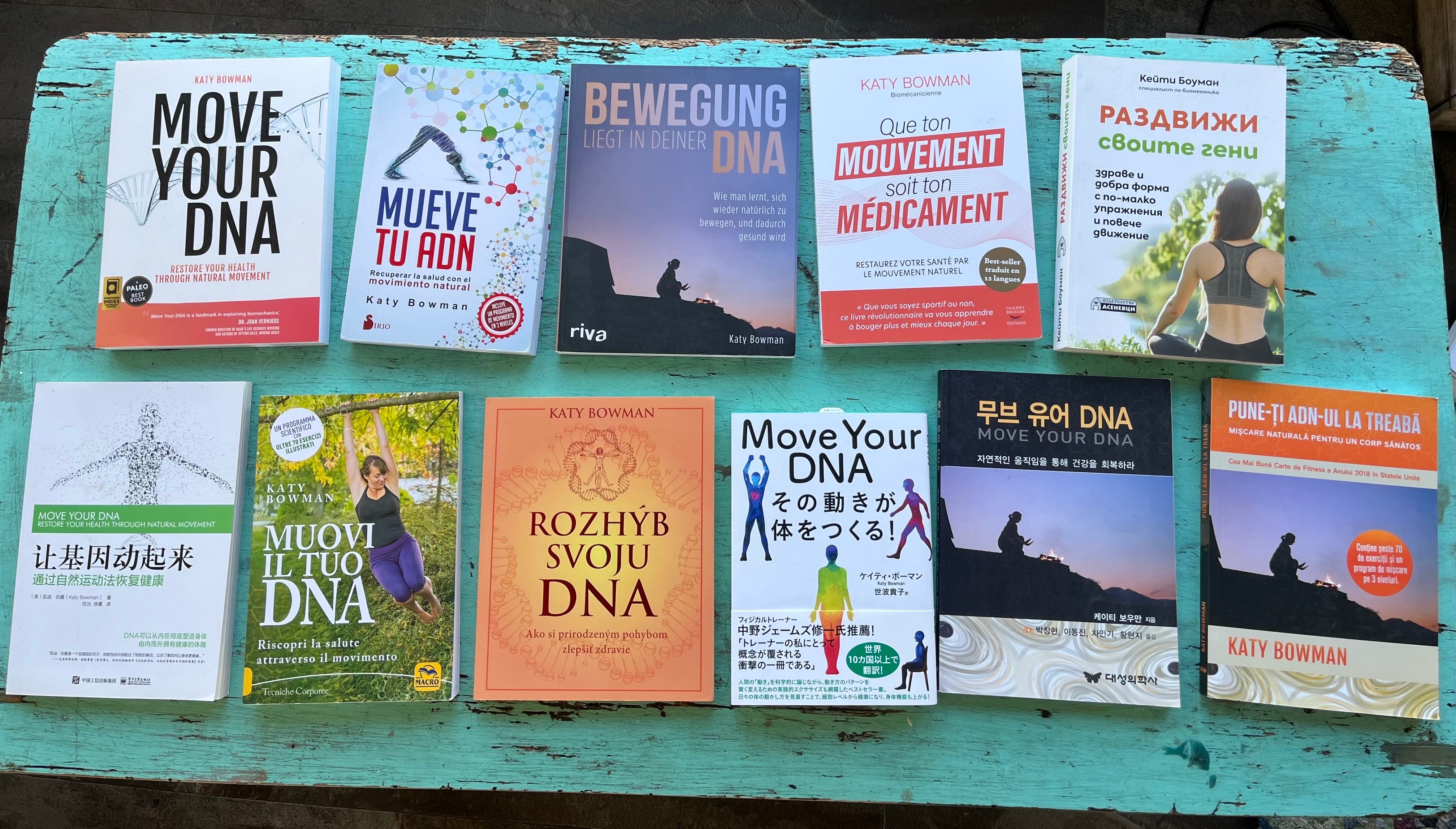
Here are some top takeaways of the book Move Your DNA1, “A landmark in explaining biomechanics.” —Dr. Joan Vernikos, Former Director of NASA’s life science division and author of Sitting Kills, Moving Heals):
All exercise is movement, but not all movement is not exercise
Your body is responding to movement inputs 24/7 (reframe: many of us so well-practiced in sitting—we are adapted to it. We are the ninjas of sitting!)
Physical activity is beneficial on both the systemic and local level
Movement changes our DNA via actually, literally, physically moving parts of it around
Here’s a metaphor for you book lovers:
The body’s cells are always baking. And so they are always reaching for the recipe books in their DNA library. Cells that are physically active (loaded through movement) reach for the books that contain recipes for things like blood vessel development, taking up blood sugar, and muscle contraction. When they don’t move, they reach for the recipe books that contain formulas for processes like inflammation, muscle atrophy, and other things that break a body down vs. build it up.
Cells that are regularly physically active need those "build up my body" recipes more often, so just like a librarian will put the HOT BOOK PICKS up front for easy reaching, these preferred recipe books are moved “up front” in the DNA. When cells don’t move regularly, the books with the best recipes are put into the DNA’s equivalent of a library’s basement archives—those rarely checked-out books that get dusty and full of cobwebs. You wanted to bake something delicious? Sorry, you’re going to need to fill out this slip of paper and come back next Wednesday to pick it up.
This is all about saving energy. What your cells do most often determines what’s easiest for your them to keep doing, even when what they’re doing is breaking the body down. It’s all about inertia, baby, and I think this is why starting an exercise habit is so hard at first. Once you get going, though, those easily-reached recipes are moved right up front, which helps keep you in motion.
On the Move Your DNA podcast, Biologist Dr. Jeannette Loram and I dive into the question: can movement really change your DNA? Using clear analogies—like libraries, recipes, and sticky notes—we unpack what DNA is, how gene expression works, and what we really mean by epigenetics.
We explore how exercise can turn the “volume up or down” on metabolic genes, pro-inflammatory markers, and stress protein genes, and how many of these changes involve altering the arrangement and access to DNA within your cells.
Using another accessible analogy of spider webs, they explore how forces on cells (through mechanotransduction—more on that in the book) act as a powerful, non-chemical “nutrient” that can literally move your DNA and alter epigenetics and gene expression. This is why exercise and everyday movement not only have systemic benefits but also site-specific effects—and why the distribution of movement throughout your body matters just as much as how much you move.
Listen above or watch a full episode:
Pictured above in English, Spanish, German, French, Bulgarian, Chinese, Italian, Slovak, Japanese, Korean, Romanian. Not pictured Polish and Thai translations.
Many Thanks 2 ✨MZ BOWMAN ✨